English


Bitcoin


Bitcoin Price Prediction: Insights and Forecasts.
Short-Term Outlook (1-3 Months) Bitcoin:
- Market Trends: Recent trends indicate that Bitcoin’s price has been fluctuating within a range due to market volatility and macroeconomic factors. Short-term predictions suggest that Bitcoin may continue to experience price swings as investors react to news and market sentiment.
- Events to Watch: Key upcoming events include regulatory announcements, institutional investment news, and macroeconomic data releases. These factors could impact short-term price movements.
Medium-Term Outlook (6-12 Months) Bitcoin:
- Market Sentiment: In the medium term, Bitcoin’s price may be influenced by broader adoption trends, including increased acceptance by businesses and potential integration into financial systems. Positive developments in these areas could drive price growth.
- Technological Developments: In recent years, Bitcoin has undergone significant technological advancements. Firstly, the introduction of the Lightning Network has greatly enhanced transaction speed and reduced fees. Additionally, improvements in blockchain scalability have addressed previous limitations, allowing for greater network efficiency. Furthermore, innovations in security protocols have strengthened Bitcoin’s resilience against potential threats.
- Economic Conditions: Firstly, in times of economic instability or high inflation, Bitcoin is often viewed as a hedge against traditional financial systems. Consequently, increased demand for Bitcoin can drive up its price. Conversely, during periods of economic growth and stability, traditional investments might be preferred, potentially leading to reduced interest in cryptocurrencies. Therefore, understanding the interplay between economic conditions and Bitcoin is essential for making informed investment decisions.
Long-Term Outlook (1-5 Years) Bitcoin:
- Adoption and Institutional Investment: Long-term predictions suggest that Bitcoin may benefit from increased institutional investment and widespread adoption as a digital asset. If Bitcoin continues to gain traction as a store of value and a medium of exchange, its price could experience substantial appreciation.
- Regulatory Environment: The evolution of regulatory frameworks will be crucial in shaping Bitcoin’s long-term prospects.
- Technological Evolution: Continued advancements in blockchain technology and potential improvements in Bitcoin’s infrastructure could contribute to its long-term success. Innovations that enhance Bitcoin’s scalability, security, and functionality could positively influence its value.
Potential Risks Bitcoin

- Volatility: Bitcoin remains highly volatile, and price predictions are subject to significant uncertainty. Investors should be prepared for potential price fluctuations and consider their risk tolerance.
- Regulatory Challenges: Regulatory actions or legal issues could impact Bitcoin’s price. Changes in government policies and regulatory stances could introduce risks to Bitcoin’s value.
- Market Sentiment: Investor sentiment and market psychology play a crucial role in Bitcoin’s price movements. Shifts in market sentiment, driven by news, events, or macroeconomic factors, can influence Bitcoin’s value.
Investment Considerations:
- Diversification: Given Bitcoin’s volatility, investors should consider diversifying their portfolios to manage risk. Combining Bitcoin with other assets can help mitigate potential losses.
- Research: Conduct thorough research and stay informed about market trends, technological developments, and regulatory changes. Understanding these factors can help investors make informed decisions.
Detailed Analysis and Market Influences
1. Historical Performance Bitcoin:
- Price Trends: Historically, Bitcoin has experienced significant price volatility, with periods of rapid growth followed by sharp declines.
- Cycle Patterns: Cycle patterns are crucial for understanding Bitcoin’s price movements. Typically, these cycles include:
- Bull Market: Characterized by rising prices and investor optimism.
- Bear Market: Marked by falling prices and pessimism.
- Consolidation: A period of price stability after a significant rise or fall.
Understanding these patterns helps investors make informed decisions based on historical trends and market behavior.
2. Technological and Network Factors Bitcoin:
- Scalability: Bitcoin’s ability to handle increased transaction volume is crucial for its long-term success.
- Security: Advances in security measures and protocols strengthen Bitcoin’s network against attacks and fraud. Enhanced security features can increase investor confidence and support long-term price stability.
3. Institutional and Corporate Adoption:
- Institutional Investment: Increased interest from institutional investors and major financial institutions can drive significant demand for Bitcoin. Institutional involvement often signals greater legitimacy and can contribute to price appreciation.
- Corporate Integration: Businesses accepting Bitcoin as a payment method or incorporating it into their operations can boost its adoption and value. High-profile endorsements or partnerships can have a substantial impact on market sentiment.
4. Economic and Geopolitical Factors Bitcoin:
- Inflation and Economic Uncertainty: Bitcoin is often viewed as a hedge against inflation and economic instability. In times of economic uncertainty, demand for Bitcoin as a store of value may increase, potentially driving up its price.
- Geopolitical Events: Global events and geopolitical tensions can influence Bitcoin’s price.
5. Market Sentiment and Investor Behavior:
- Investor Psychology: Market sentiment plays a significant role in Bitcoin’s price movements. Positive news, technological advancements, and bullish market trends can drive investor enthusiasm and price increases.
- Social Media and Influencers: Social media platforms and influential figures can impact Bitcoin’s price through their statements and endorsements. Public sentiment driven by these sources can lead to rapid price fluctuations.
6. Regulatory Environment Bitcoin:
- Global Regulations: The regulatory landscape for cryptocurrencies varies by country and can influence Bitcoin’s price.
7. Technical Indicators and Analysis Bitcoin:
- Moving Averages: Technical analysis tools, such as moving averages, help in identifying trends and potential price reversals. For example, the 50-day and 200-day moving averages are commonly used to assess long-term trends.
- Relative Strength Index (RSI): The RSI is a momentum oscillator used to identify overbought or oversold conditions in the market.
8. Market Forecasts and Expert Opinions
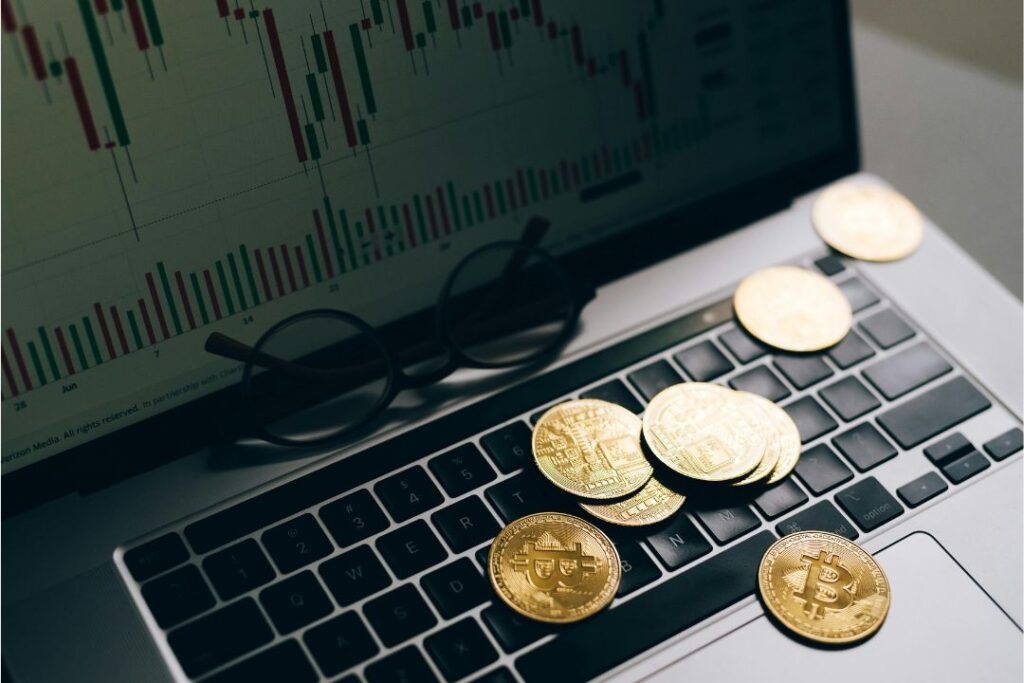
- Analyst Predictions: Financial analysts and cryptocurrency experts provide various price forecasts based on market analysis, historical data, and economic conditions.
- Diverse Opinions: Forecasts can vary widely, with some experts predicting substantial long-term gains while others caution about potential risks and volatility.
Investment Strategies for Bitcoin
1. Long-Term Holding (Holding):
- Strategy Overview: This strategy involves buying Bitcoin and holding it for an extended period, regardless of short-term price fluctuations.
- Advantages: Long-term holding can capitalize on Bitcoin’s potential for substantial growth over time. It requires less frequent trading, reducing transaction costs and minimizing the impact of short-term market volatility.
- Considerations: Investors should be prepared for periods of significant price volatility and have a strong conviction in Bitcoin’s long-term value. This strategy requires patience and a long-term view.
2. Dollar-Cost Averaging (DCA) Bitcoin:
- Strategy Overview: Dollar-cost averaging involves investing a fixed amount of money into Bitcoin at regular intervals, regardless of its price. This approach smooths out the effects of volatility by buying more Bitcoin when prices are lower and less when prices are higher.
- Advantages: DCA reduces the risk of making large investments at inopportune times and helps mitigate the impact of market volatility.
- Considerations: While DCA reduces timing risk, it does not eliminate it. Investors should still monitor their investments and be prepared for long-term market changes.
3. Trading and Technical Analysis:
- Strategy Overview: Active trading involves buying and selling Bitcoin based on technical analysis and market trends. Traders use various technical indicators, chart patterns, and market signals to make informed decisions.
- Advantages: Trading can potentially capitalize on short-term price movements and market volatility. Skilled traders can take advantage of price swings to generate returns.
- Considerations: Trading requires significant time, knowledge, and expertise. It involves higher transaction costs and can expose investors to greater risk. It is essential to have a well-defined trading plan and risk management strategy.
4. Diversification:
- Strategy Overview: Diversifying investments across different asset classes, including Bitcoin and other cryptocurrencies, can reduce overall risk.
- Advantages: By including a mix of assets, investors can potentially offset losses in one area with gains in another.
- Considerations: Diversification should be done thoughtfully, considering the correlations between assets. It is important to understand the risk and return characteristics of each asset in the portfolio.
5. Risk Management Bitcoin:
- Strategy Overview: To begin with, Bitcoin, as the leading cryptocurrency, offers unique investment opportunities. Firstly, understanding its volatility is crucial, as it can lead to both significant gains and losses. Consequently, a well-thought-out strategy should include diversifying investments to manage risk. Additionally, monitoring market trends and regulatory developments will provide valuable insights into Bitcoin’s potential movements. Therefore, a combination of research, risk management, and strategic timing is essential for successful Bitcoin investment.
- Advantages: Firstly, Bitcoin offers decentralization, removing the need for intermediaries like banks. Additionally, it provides global accessibility, allowing transactions across borders with ease. Moreover, Bitcoin transactions often have lower fees compared to traditional financial systems. Finally, Bitcoin can act as a hedge against inflation, preserving value in unstable economic conditions.
- Considerations: When evaluating Bitcoin as an investment, several factors come into play. Firstly, understanding Bitcoin’s volatility is crucial, as its price can fluctuate dramatically. Additionally, assessing the regulatory environment is important, since regulations vary by country and can impact Bitcoin’s legality and taxation. Moreover, considering the security of your investment is vital, given the risks of hacking and fraud. Finally, weighing the long-term potential against the short-term risks will help in making an informed decision.
6. Staking and Yield Generation:
- Strategy Overview: Some investors may look to generate additional returns through Bitcoin-related financial products, such as interest-bearing accounts or yield farming.
- Advantages: Lower Transaction Fees: Bitcoin transactions often have lower fees compared to traditional banking and payment systems. Security: Bitcoin uses advanced cryptographic techniques to secure transactions and control the creation Transparency: All Bitcoin transactions are recorded on a public ledger called the blockchain, providing Limited Supply: Bitcoin has a capped supply of 21 million coins, which can potentially increase its value over time due to scarcity.
- Considerations: Yield generation products come with their own risks, including platform security and interest rate fluctuations. It is crucial to research and choose reputable platforms and understand the associated risks.
7. Staying Informed Bitcoin:
- Strategy Overview: Keeping up-to-date with news, market trends, and technological developments is essential for making informed investment decisions. Staying informed helps investors adapt to changes and opportunities in the market.
- Advantages: Being well-informed allows investors to make timely decisions and adjust their strategies based on current information. It helps in understanding market dynamics and potential impacts on Bitcoin’s price.
- Considerations: Reliable sources of information should be used, and it is important to avoid being swayed by rumors or hype. Critical thinking and analysis are key to making sound investment decisions.
Future Developments and Market Trends Bitcoin
1. Technological Innovations Bitcoin:
- Blockchain Upgrades: Blockchain upgrades for Bitcoin are crucial for enhancing its functionality, security, and scalability. Recent upgrades include:
- Taproot (2021): This upgrade improves privacy, efficiency, and the flexibility of smart contracts. By enabling more complex transactions, it enhances Bitcoin’s usability.
- Schnorr Signatures (2021): Schnorr signatures streamline transaction processing and reduce the size of data, leading to faster and more efficient transactions.
- Lightning Network Integration: This ongoing upgrade aims to facilitate faster, lower-cost transactions off the main Bitcoin blockchain, addressing scalability issues.
- These upgrades are vital for Bitcoin’s continued growth and adaptation in the evolving digital landscape.
- Interoperability: Advances in interoperability between different blockchain networks could facilitate smoother transactions and interactions across various platforms. This could enhance Bitcoin’s utility and integration within the broader cryptocurrency ecosystem.
2. Regulatory Developments:
- Global Regulatory Trends: The global regulatory landscape for cryptocurrencies is evolving. As governments and regulatory bodies establish clearer guidelines, Bitcoin’s legitimacy and market stability may improve.
- Taxation and Compliance: Changes in tax regulations and compliance requirements for cryptocurrency transactions could impact Bitcoin’s adoption and usage. Investors should stay informed about regulatory changes that could affect their investments.
3. Institutional Adoption:
- Increased Institutional Involvement: Consequently, major financial firms are now entering the cryptocurrency space, which has significantly boosted Bitcoin’s legitimacy and market presence. Moreover, this shift is fostering greater stability and adoption within the digital asset ecosystem. As a result, the increased institutional interest is transforming Bitcoin from a speculative asset into a more integrated component of the global financial system.
- Product Innovations: Firstly, Bitcoin has revolutionized digital currency by introducing blockchain technology, which enhances transparency and security. Furthermore, recent product innovations include the development of layer-two solutions such as the Lightning Network, which facilitates faster and cheaper transactions. Additionally, Bitcoin’s integration into traditional financial systems is progressing, with more companies and financial institutions adopting Bitcoin-based payment solutions. Consequently, these advancements are driving broader acceptance and usage of Bitcoin, ultimately shaping the future of digital finance.
4. Economic Factors:
- Inflationary Pressures: Specifically, with inflation eroding the purchasing power of fiat currencies, many investors turn to Bitcoin due to its decentralized nature and limited supply. Consequently, Bitcoin’s appeal grows as a store of value. However, despite this potential, it’s important to recognize that Bitcoin also faces its own volatility and risks. Therefore, while Bitcoin might offer a safeguard against inflation, investors should weigh both its advantages and uncertainties carefully.
- Global Economic Conditions: For instance, during periods of economic uncertainty or inflation, Bitcoin is frequently viewed as a hedge against traditional financial systems. Conversely, in times of economic stability, its volatility can attract speculative investors. Thus, Bitcoin’s performance is closely intertwined with global economic shifts, influencing and being influenced by broader financial dynamics.
5. Market Sentiment:
- Positive Sentiment: Bitcoin has garnered significant attention and enthusiasm due to its innovative technology and potential for high returns. Additionally, Bitcoin’s growing acceptance by major institutions and businesses underscores its increasing legitimacy and potential as a valuable asset.
- Negative Sentiment: Conversely, if there’s fear or uncertainty—such as regulatory crackdowns or security breaches—negative sentiment can lead to selling pressure, causing the price to drop.
- Influencing Factors: Social media and influential figures also play a role in shaping investor perceptions.
- Impact on Price: Sentiment shifts can cause Bitcoin’s price to fluctuate significantly. Positive news may drive prices up, while negative news may lead to declines. Investors often react quickly to changes in sentiment, making it a key factor in short-term price movements.
6. Adoption and Use Cases:
- Mainstream Acceptance: The growing acceptance of Bitcoin as a payment method by businesses and online platforms can drive its adoption. Increased use in transactions and real-world applications may contribute to price stability and growth.
- Technological Integration: Integration of Bitcoin into financial services, payment systems, and decentralized finance (DeFi) platforms could enhance its utility and appeal. Innovations that facilitate seamless Bitcoin transactions and usage may impact its market position.
7. Environmental Concerns:
- Sustainability Issues: Bitcoin, while revolutionary in many ways, faces significant sustainability issues. Firstly, its energy consumption is immense, with mining operations requiring large amounts of electricity, often derived from non-renewable sources. Moreover, the environmental impact of Bitcoin mining contributes to increased carbon emissions, raising concerns about its ecological footprint. Additionally, the high energy demands have led to debates about the efficiency of the Bitcoin network compared to other digital currencies. Consequently, addressing these sustainability challenges is crucial for Bitcoin’s long-term viability and environmental responsibility.
- Green Initiatives: The adoption of green initiatives and sustainable practices within the Bitcoin mining industry may improve its environmental footprint and support long-term adoption.
8. Investment Risks and Strategies:
- Market Volatility: News and events related to Bitcoin, such as regulatory announcements or technological developments, can cause rapid price changes. Market Liquidity: Bitcoin’s relatively lower liquidity compared to traditional assets can lead to sharper price swings. Consequently, Bitcoin’s volatility presents both opportunities and risks for investors.
- Diversification and Risk Management: Diversification and risk management are crucial strategies when investing in Bitcoin. Firstly, diversification involves spreading your investments across various assets, which helps mitigate the risk of a significant loss if one asset underperforms. Specifically, while Bitcoin may offer high returns, it is also highly volatile. Therefore, incorporating other cryptocurrencies or traditional assets into your portfolio can provide a buffer against Bitcoin’s price fluctuations. Additionally, effective risk management includes setting stop-loss orders and regularly reviewing your investment strategy. Consequently, these practices can help balance potential gains from Bitcoin with controlled exposure to its inherent risks.
Conclusion:
The future of Bitcoin involves a dynamic interplay of technological innovations, regulatory developments, institutional adoption, and market sentiment. As Bitcoin continues to evolve and integrate into various aspects of the financial system, its potential for growth and impact on the market will be shaped by these factors. Investors should stay informed, consider diverse strategies, and approach Bitcoin with a clear understanding of its potential benefits and risks.
Disclaimer:
Investing in Bitcoin and other cryptocurrencies involves significant risk, including high volatility and potential loss of capital. The information provided is based on current market conditions and should not be considered as financial advice. Always conduct your own research and consult with a financial advisor to tailor investment decisions to your individual needs and financial goals.