English


Mohammed bin Salman


Introduction
Mohammed bin Salman, often referred to as MBS, is a prominent figure in contemporary global politics. Born on August 31, 1985, he is the Crown Prince of Saudi Arabia and the Deputy Prime Minister. His influence extends beyond the Kingdom, making him a significant player in international affairs.
Mohammed bin Salman Early Life and Education
- Firstly, Mohammed bin Salman was born in Jeddah, Saudi Arabia, to King Salman bin Abdul-Aziz and his third wife, Fahda bint Falah. He attended King Saud University, where he earned a degree in law. This educational background laid the foundation for his understanding of governance and legal frameworks.
Rise to Power Mohammed bin Salman
- After his father ascended the throne in 2015, MBS quickly rose through the ranks. Initially appointed as the Minister of Defense, he led Saudi Arabia into a new military era, significantly impacting the nation’s defense strategies. Subsequently, in June 2017, he was appointed Crown Prince, succeeding his cousin, Mohammed bin Nayef. This appointment marked a turning point in Saudi politics, as it consolidated power within the ruling family.
Vision 2030: Economic Reforms
- Transitioning to his policies, Mohammed bin Salman is perhaps best known for his Vision 2030 initiative. Launched in 2016, this ambitious plan aims to diversify the Saudi economy away from oil dependency. To illustrate, Vision 2030 seeks to expand sectors such as tourism, entertainment, and renewable energy. Consequently, it involves significant investments in infrastructure and technology, showcasing MBS’s forward-thinking approach to governance.
Influence Mohammed bin Salman
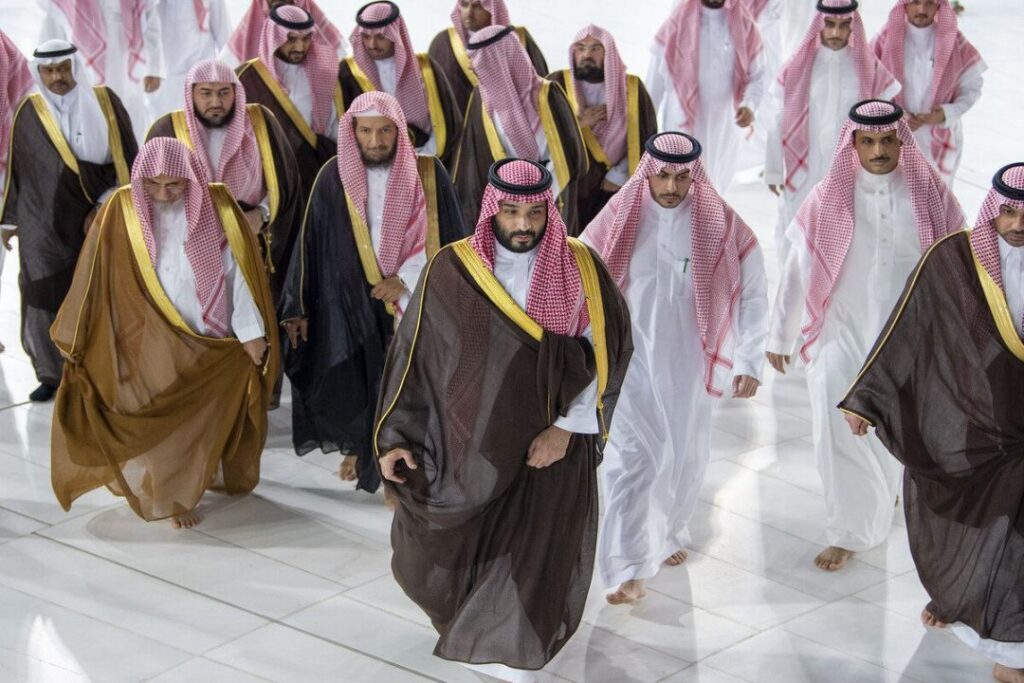
Mohammed bin Salman’s influence extends beyond Saudi Arabia’s borders, significantly impacting regional and international affairs. As the architect of Vision 2030, he aims to reduce the kingdom’s reliance on oil by investing in sectors like tourism, entertainment, and technology. Landmark projects like NEOM, a $500 billion smart city, and other mega-developments highlight his ambition to position Saudi Arabia as a leading global hub for innovation and business.
Domestically
- MBS has pushed for social liberalization, loosening the strict religious rules that once governed everyday life. The introduction of concerts, cinemas, and sporting events has attracted both domestic and foreign attention. However, these changes have been accompanied by an intensified crackdown on political dissent, with activists, journalists, and critics of the regime facing imprisonment or worse. On the international stage, MBS has pursued an assertive foreign policy. He led Saudi Arabia into the war in Yemen, a conflict that has resulted in a humanitarian crisis and drawn criticism for its toll on civilians.
Relationship Mohammed bin Salman
- His relationship with other regional powers is complex. While seeking to counter Iran’s influence in the Middle East, MBS has also taken steps to reconcile with neighboring Gulf countries. The easing of the Saudi-led blockade of Qatar in 2021 signaled a shift toward a more pragmatic approach in regional diplomacy. Despite his transformative vision, MBS’s rule remains controversial. His consolidation of power has seen the sidelining of potential rivals within the royal family, and the aggressive methods used to maintain control have raised alarms about the direction Saudi Arabia is taking under his leadership.
Crown Prince Mohammed bin Salman
- While his reforms have opened up Saudi society in unprecedented ways, he remains deeply connected to the kingdom’s conservative roots. The religious establishment still holds considerable influence, and MBS has carefully navigated the balance between pushing modernization while maintaining the monarchy’s alliance with key religious figures.
Goals Mohammed bin Salman

One of his key goals has been to transform Saudi Arabia’s image on the global stage, shifting perceptions from a nation historically tied to ultraconservative Islam to one that is dynamic, open, and forward-looking. High-profile events such as hosting global sports tournaments, concerts by international artists, and even major summits have become part of this rebranding strategy. By doing so, MBS aims to make Saudi Arabia not only a regional powerhouse but also a significant player in global culture and business.
Social Reforms
- In addition to economic reforms, MBS has initiated various social changes. For instance, he has lifted the ban on women driving, allowed mixed-gender concerts, and increased public entertainment options. These reforms reflect a broader strategy to modernize Saudi society and enhance its global image. However, these changes have sparked both praise and criticism, highlighting the complexities of cultural shifts in a conservative society.
Foreign Policy
- Furthermore, Mohammed bin Salman’s foreign policy has been characterized by assertiveness. He has taken a strong stance against Iran, viewing it as a regional adversary. This rivalry has led to significant developments, including the ongoing conflict in Yemen, where Saudi Arabia intervened in 2015. The humanitarian crisis resulting from this conflict has drawn international scrutiny and criticism.
Challenges and Controversies Mohammed bin Salman
- Despite his progressive initiatives, MBS faces numerous challenges and controversies. Additionally, the economic repercussions of the COVID-19 pandemic have posed significant hurdles to his Vision 2030 objectives.
Economic Diversification Mohammed bin Salman
- One of the most notable achievements is the substantial increase in non-oil revenue, which rose by 30% from SAR 201 billion in 2016 to SAR 261 billion in 2023. This growth has been driven by new fiscal measures, including the introduction of Value Added Tax (VAT) in 2018 (Arab News)(Nobel Trust).
- The Public Investment Fund (PIF) has also seen remarkable success, with revenues doubling to $88.22 billion, supporting investments in various sectors, including real estate and technology.
Tourism and Entertainment
- Saudi Arabia is rapidly establishing itself as a global tourism destination, welcoming around 60 million tourists in the first half of 2024 alone. This surge is largely due to significant developments like the Red Sea Project and Al-Ula, along with the hosting of over 2,000 entertainment events annually.
Infrastructure and Urban Development
- Vision 2030 has spurred several mega-projects aimed at enhancing the Kingdom’s infrastructure. Notable among these is the Sakani housing program, which has successfully delivered over 200,000 housing units since its launch, increasing home ownership among Saudis to 62%.
Mohammed bin Salman Healthcare and Education
- The healthcare sector is expanding rapidly, with significant investments aimed at increasing hospital capacity and improving service quality.
Renewable Energy and Environmental Sustainability
- Saudi Arabia is heavily investing in renewable energy projects, aiming to generate 50% of its electricity from renewable sources by 2030. Initiatives like the Sakaka Solar Power Plant and the Saudi Green Initiative, which aims to plant 10 billion trees, are key components of this strategy.
Social and Cultural Reforms
- The Kingdom is also making strides in social reforms, particularly regarding women’s empowerment, which has seen female workforce participation increase to 33%. Cultural initiatives are actively promoting the preservation of heritage and the organization of cultural events.
Conclusion
Saudi Arabia’s Vision 2030 is making significant strides toward transforming the nation’s economy and society. For more detailed insights, you can check the full report. In summary, Mohammed bin Salman is a pivotal figure in Saudi Arabia and the broader Middle Eastern landscape. His vision for a modernized and diversified Saudi Arabia presents both opportunities and challenges.